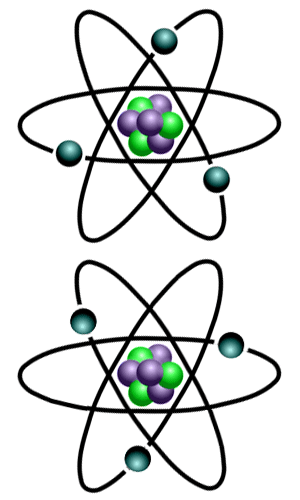
Periodic Table Group and Classification of the of the Terbium Element
Elements can be classified based on their physical states (States of Matter) e.g. gas, solid or liquid. This element is a solid. Terbium is classified as an element in the Lanthanide series as one of the "Rare Earth Elements" which can located in Group 3 elements of the Periodic Table and in the 6th and 7th periods. The Rare Earth Elements are divided into the Lanthanide and Actinide series. The elements in the Lanthanide series closely resemble lanthanum, and one another, in their chemical and physical properties. Their compounds are used as catalysts in the production of petroleum and synthetic products. Nearly 75% of all the elements in the Periodic Table are classified as metals which are detailed in the List of Metals. Facts about the Discovery and History of the Terbium Element
Terbium was discovered by Carl Gustaf Mosander in Sweden in 1843 History of the Periodic Table
Check out the brief History of the Periodic Table which details dates and the names of famous scientists and chemists who contributed to the development of the Periodic Table. Occurrence of the Terbium Element
Contained in many minerals, including cerite, gadolinite, monazite Abundances of the element in different environments
% in Universe 5×10⁻⁸%
% in Sun 1×10⁻⁸%
% in Meteorites 3.9×10⁻⁶%
% in Earth's Crust 0.000093%
% in Oceans 1.4×10⁻¹¹%
% in Humans N/A Associated Uses of Terbium
Used to dope Calcium fluoride, calcium tungstate and Strontium molybdate
Used in alloys
Electronic devices
Fluorescent lamps
Color TV tubes |